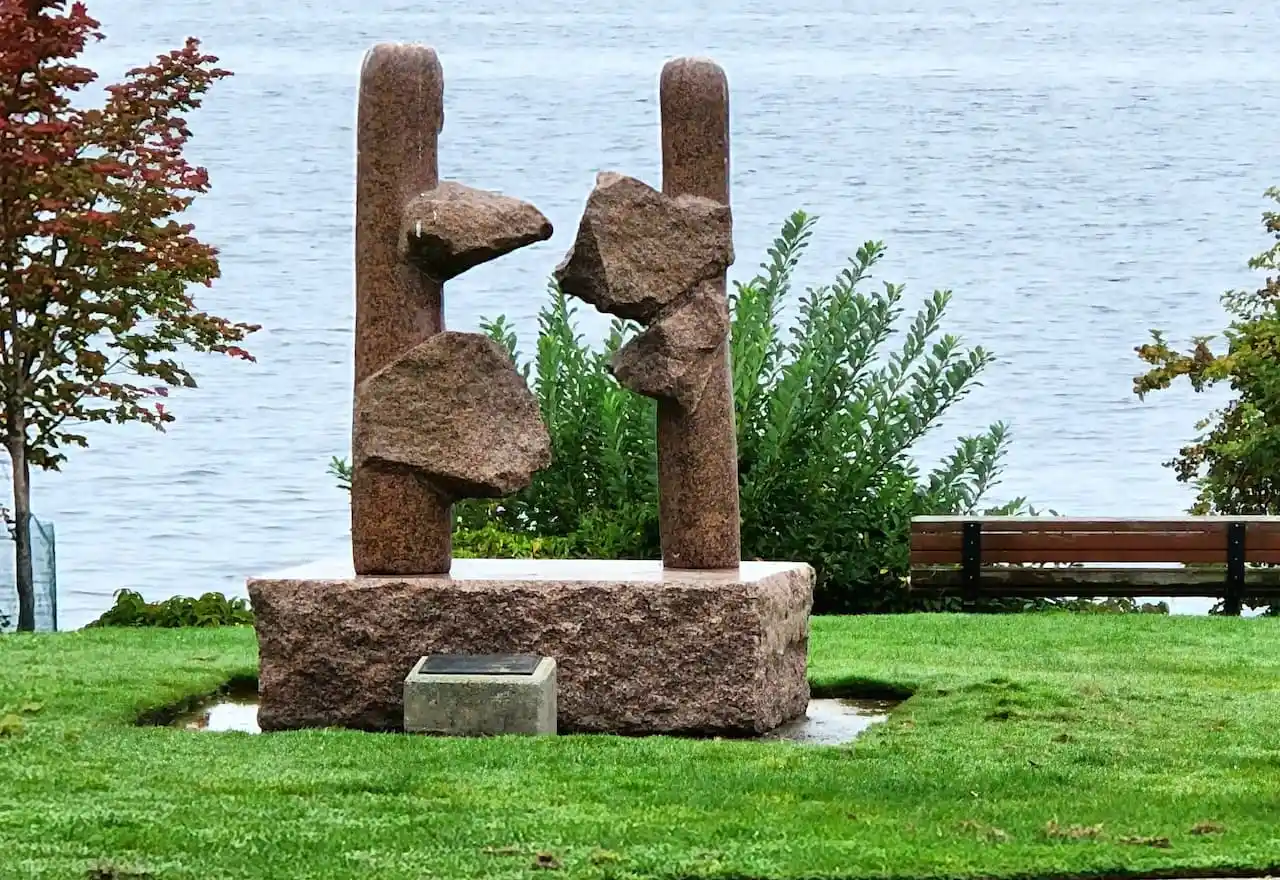
The Plains of Abraham are most often experienced as open ground shaped by major historical events. Wide lawns, long sightlines, and monuments define how many people move through the space. Yet woven into this expansive landscape is a quieter layer that often goes unnoticed.
Within the Parc des Champs de Bataille, a series of carefully composed gardens shifts attention from scale to detail. These spaces slow movement and invite observation. Rather than explaining history, they allow it to be felt through design, seasonality, and continuity.
What makes these gardens compelling is their restraint. They do not interrupt the Plains. They soften them. Paths narrow, plantings frame rather than dominate, and meaning unfolds gradually for those willing to move at a different pace.
Gardens as a Counterbalance to History
The Plains of Abraham carry national and international historical weight. Battles, monuments, and memory define much of their identity. The gardens introduce a counterbalance. They soften the narrative and allow visitors to connect with the site through continuity rather than conflict.
Instead of focusing on what happened, the gardens focus on what remains. They create spaces where history is absorbed through care, design, and time. This approach reflects how the Plains function today within Quebec City, not only as a historical site, but as a living public landscape.
The Joan of Arc Garden
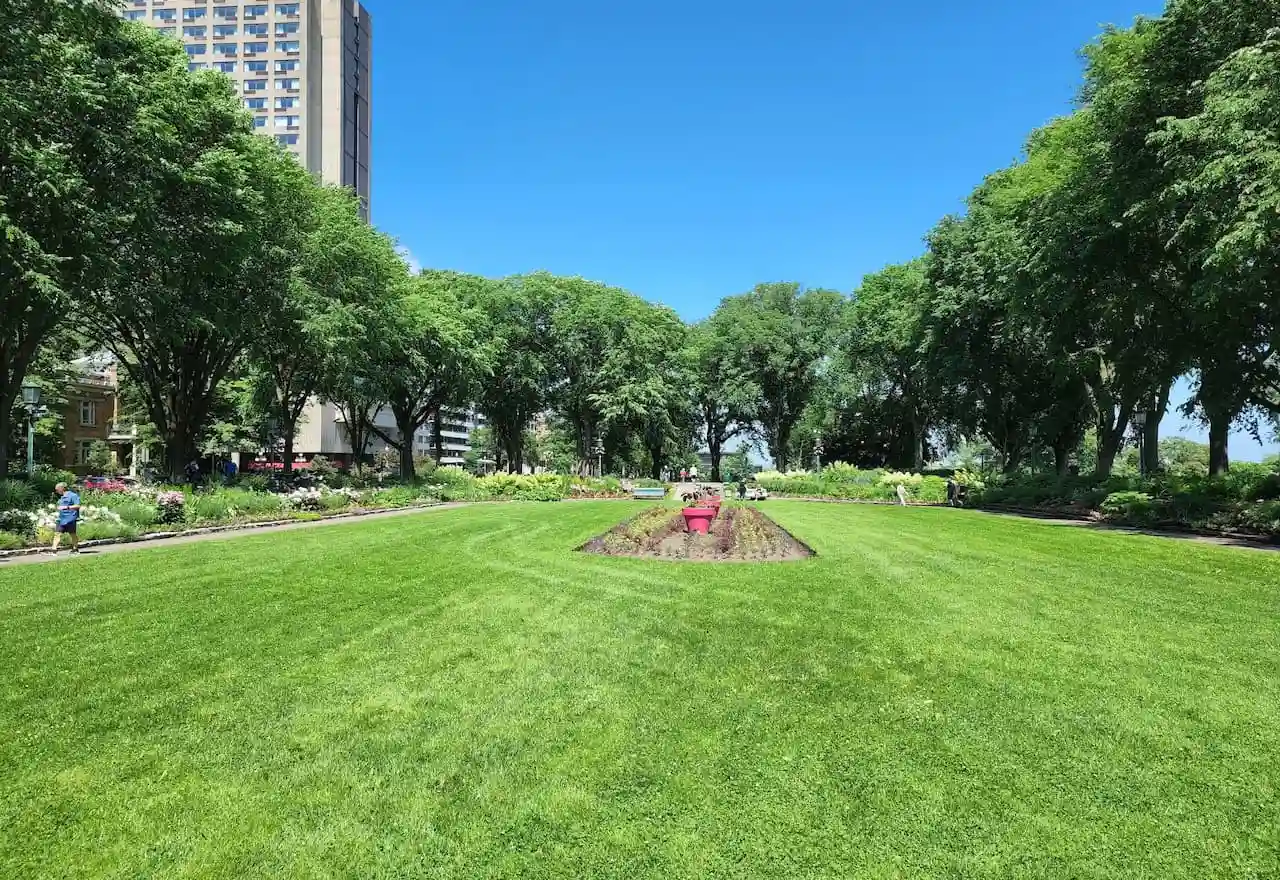
Among the most recognizable of these spaces is the Joan of Arc Garden. Structured and symbolic, it stands apart from the surrounding openness of the Plains.
Its design emphasizes balance and resilience. Formal lines guide movement, while seasonal plantings introduce variation throughout the year. Spring brings clarity and color. Summer fullness. Autumn restraint. Winter returns the garden to pure structure.
Symbolism is present without being instructional. The space allows interpretation to develop naturally, shaped by time and attention rather than signage.
Paths That Change the Pace
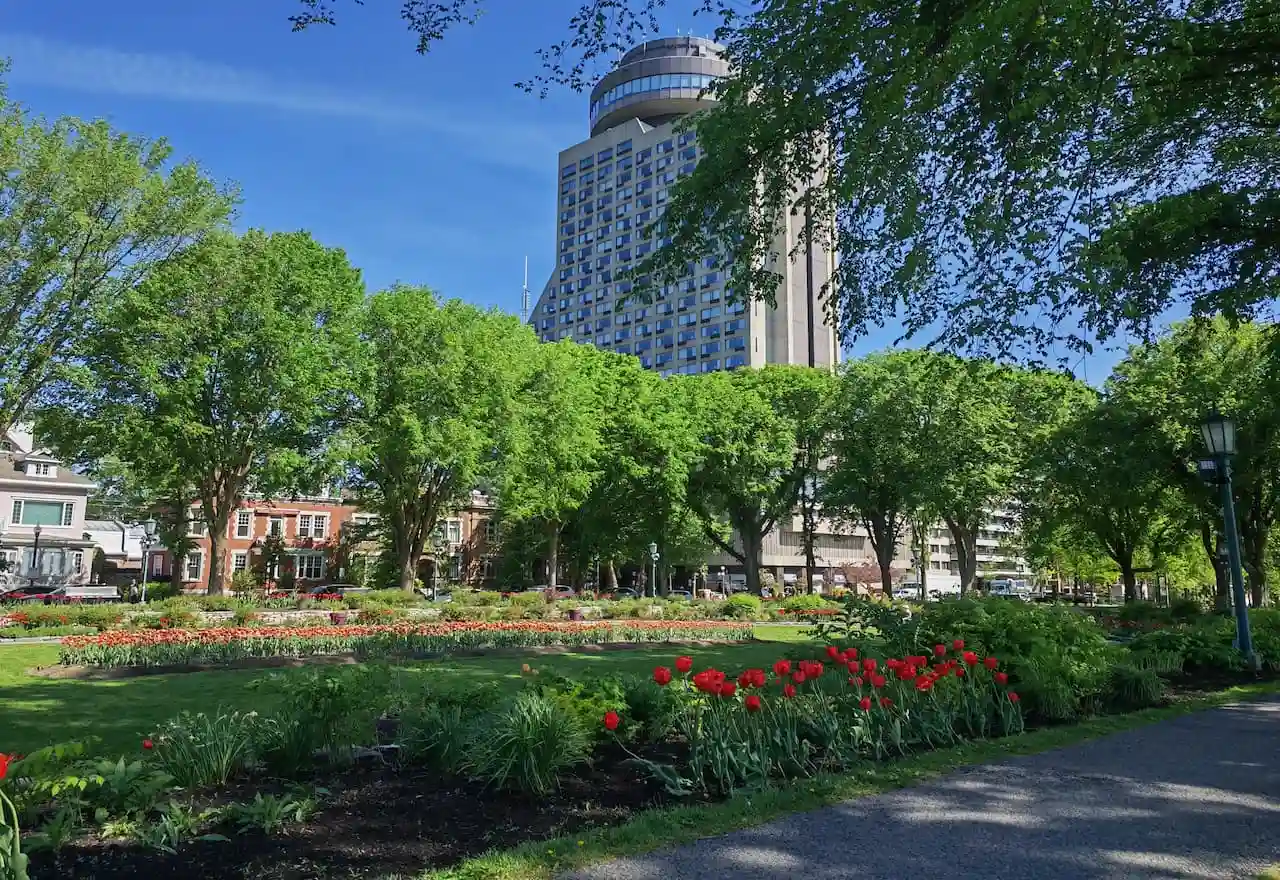
Garden paths within the Plains are intentionally scaled to alter movement. As visitors enter these areas, wide lawns give way to narrower walkways and defined borders. The shift is subtle but immediate.
Paths do not direct toward a single focal point. They encourage wandering. Views appear briefly, framed by trees or hedges, then disappear again. The experience becomes about noticing rather than arriving.
Seasonal Landscapes in Motion
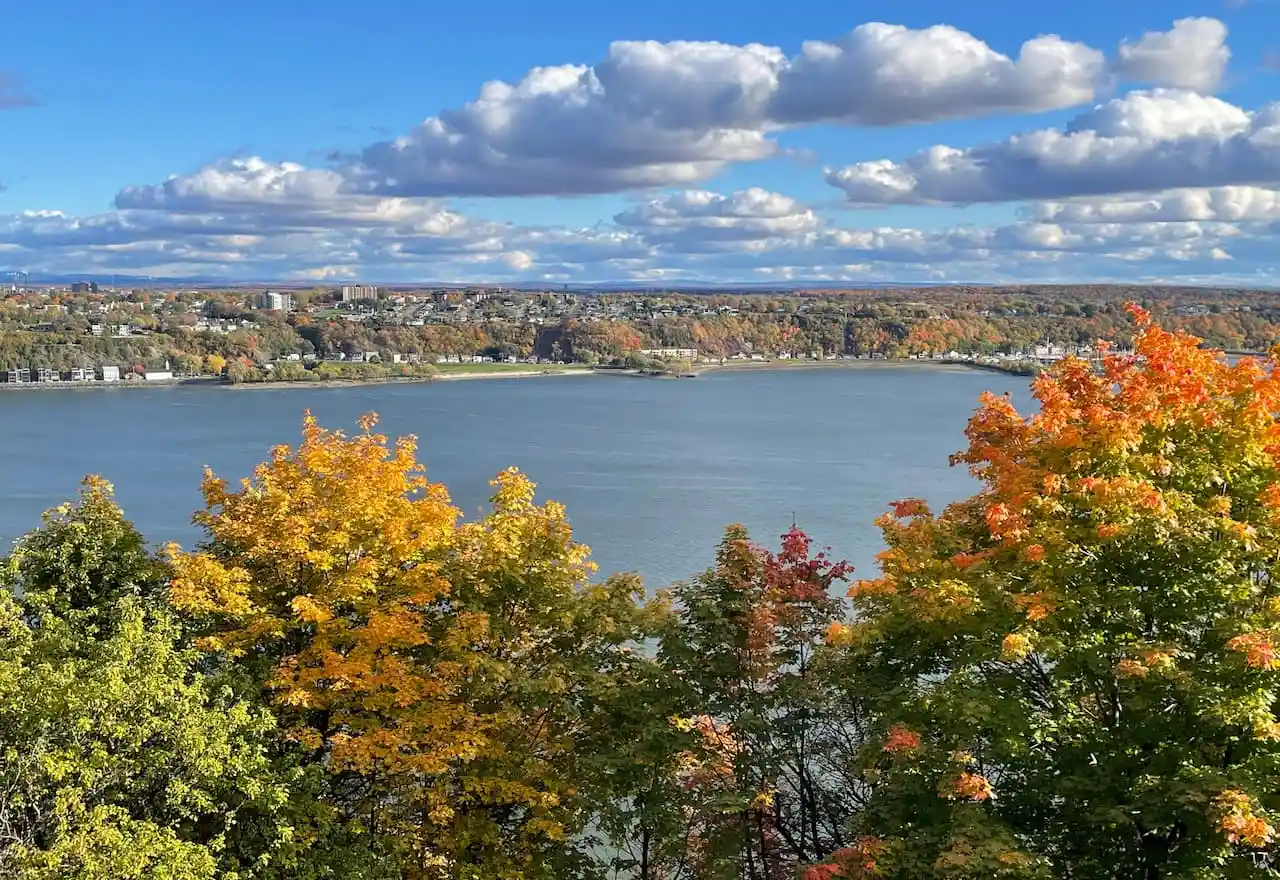
The gardens of the Plains of Abraham are shaped by the calendar. Each season reveals a different expression without altering the underlying structure.
Spring introduces renewal and color. Summer emphasizes density and shade. Autumn quiets the palette, drawing attention to form and texture. Winter reduces the landscape to geometry and line.
This rhythm encourages return visits. Familiar spaces feel new depending on light, weather, and time of year.
History Without Instruction
Unlike museums or interpretive centers, the gardens communicate history indirectly. There is little explanation and no required narrative. Meaning emerges through alignment, repetition, and long term care.
This absence of instruction preserves calm and allows visitors to connect emotionally rather than analytically. Knowledge enhances the experience, but it is not required.
Who These Gardens Are For
The gardens attract people seeking quiet engagement. Walkers slow naturally. Readers linger. Photographers wait for light instead of crowds. Conversations soften without effort.
Even during busy periods, the gardens retain separation from the wider park. Their design absorbs presence rather than amplifying it.
Visiting the Gardens Today
The gardens are accessible year round and integrate seamlessly into a walk across the Plains. No planning is required. Entry is intuitive rather than marked.
Some visits last minutes. Others stretch longer. Both feel complete.
When Progress Begins Quietly
The gardens of the Plains of Abraham demonstrate how meaningful change often happens without noise. Growth is gradual, intentional, and shaped by steady care.
The same approach applies to financial support. Crédit Instant helps Quebec residents handle short term needs responsibly, without pressure or confusion. If you are facing an unexpected expense or transition, the right support can give you space to focus on what comes next, not what stands in the way.
FAQ
Where are the gardens located?
They are located throughout the Parc des Champs de Bataille, within the Plains of Abraham in Quebec City.
Is the Joan of Arc Garden open year round?
Yes. It is accessible in all seasons, with its appearance changing throughout the year.
Are the gardens suitable for quiet walks?
Yes. They are designed to encourage calm movement and reflection.
Is there an entrance fee?
No. Access to the Plains of Abraham and its gardens is free.
When is the best time to visit?
Each season offers a distinct atmosphere, with spring and autumn especially appreciated for color and light.