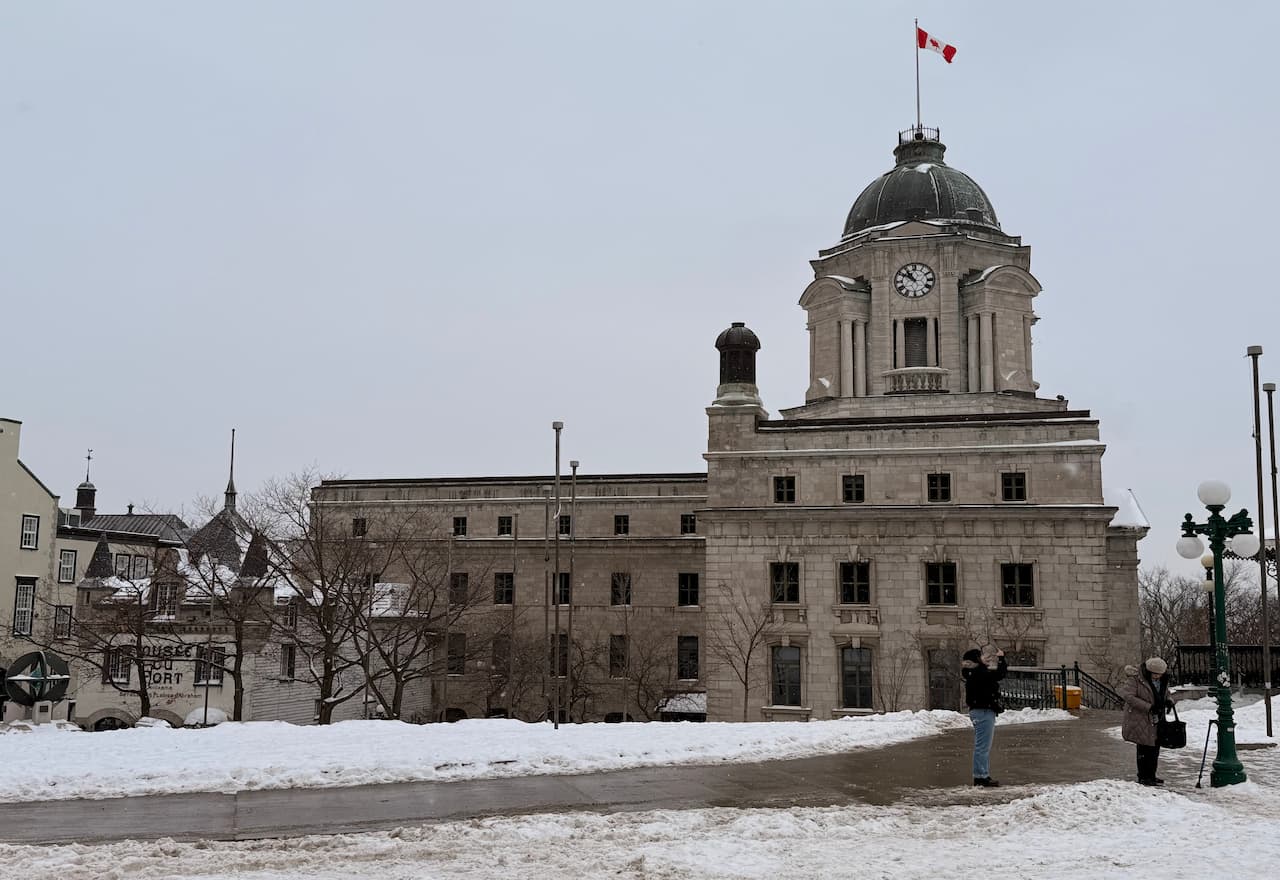
Place d’Youville functions as a hinge point in Quebec City. It connects Old Quebec to surrounding neighborhoods, links past and present, and shifts constantly between movement and pause. Buses pass through, pedestrians cross in every direction, and public life unfolds in plain view.
Unlike scenic overlooks or enclosed historic sites, Place d’Youville feels active and exposed. It is shaped by what happens there daily. Meetings, performances, waiting, walking, and gathering all leave their mark on the space.
From Fortifications to Public Square
Place d’Youville occupies ground once defined by Quebec City’s defensive walls. When sections of the fortifications were dismantled in the nineteenth century, the area opened physically and symbolically. What had been a boundary became a meeting place.
Over time, the square absorbed layers of civic life. Markets, transit routes, and public institutions shaped its role. Rather than preserving a single historical moment, Place d’Youville evolved alongside the city itself.
Its proximity to Saint Jean Gate reinforces this transitional identity. The square marks the passage between enclosed historic streets and the broader urban flow beyond.
A Space Defined by Movement
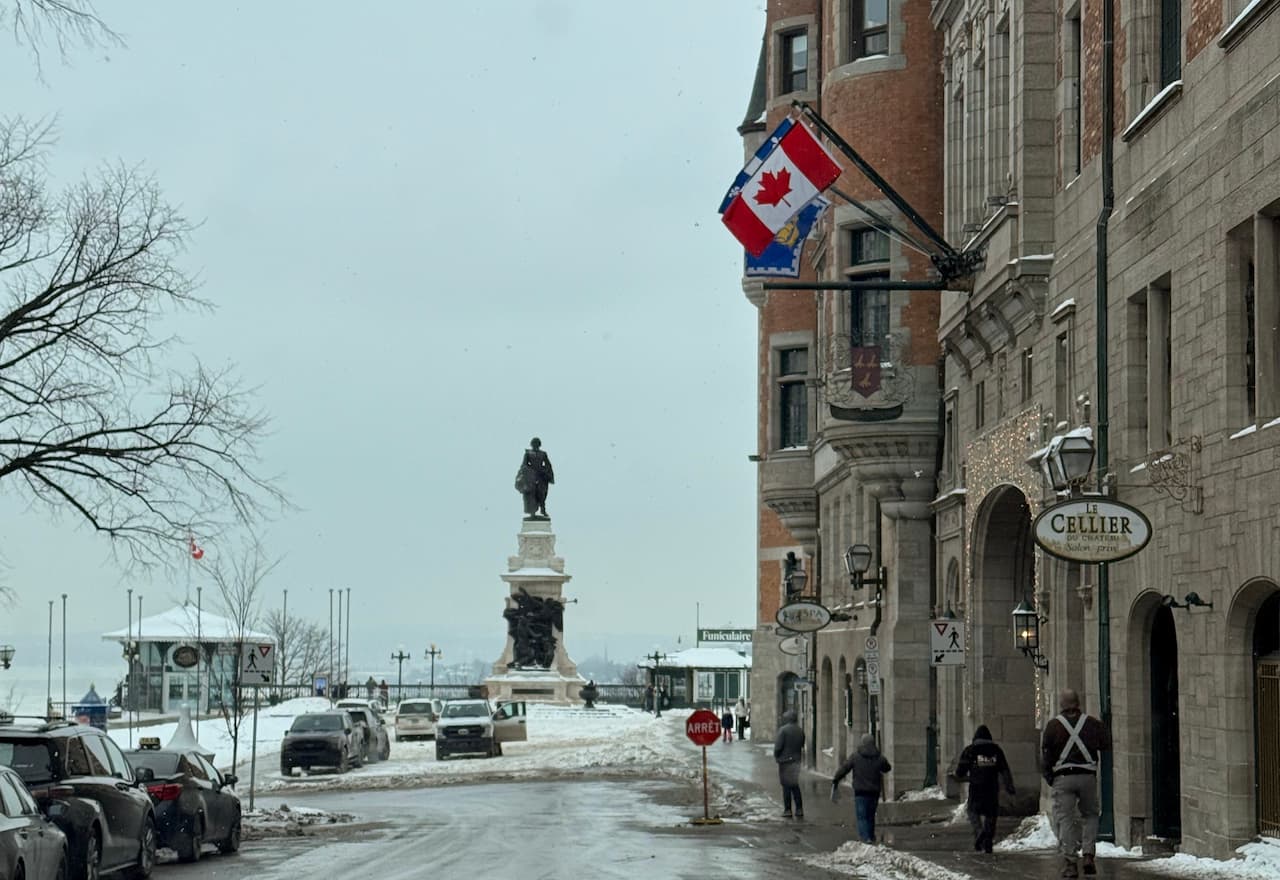
Place d’Youville is rarely still. People arrive from different directions, pause briefly, then continue on. This constant circulation gives the square a rhythm that reflects everyday life in Quebec City.
Public transit plays a role, but so does pedestrian movement. Office workers, students, tourists, and residents all pass through, each using the space differently. Some stop to rest or observe. Others cross quickly without looking back.
This mix creates a sense of shared ownership. No single group defines the square. Its identity comes from overlap.
Cultural Life in the Open
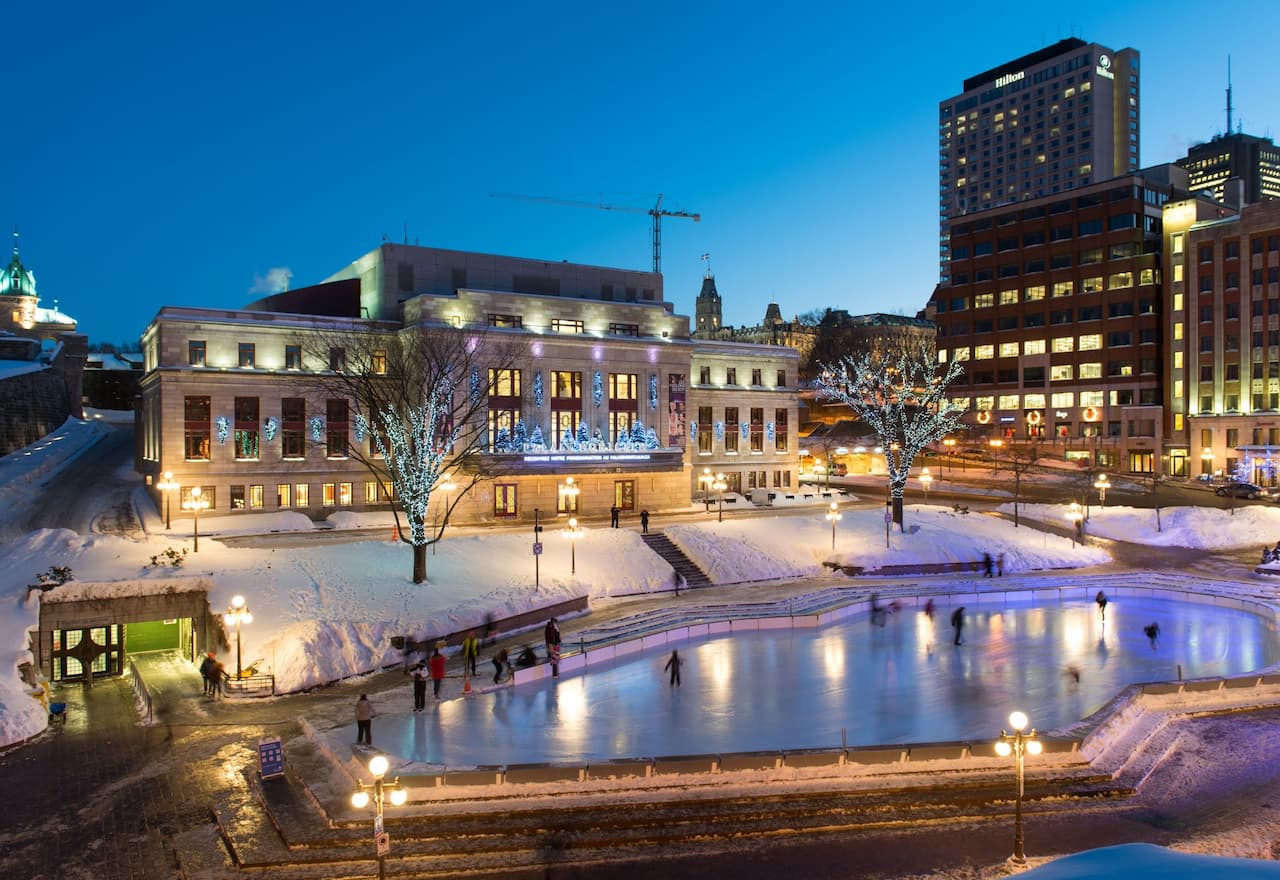
Place d’Youville regularly becomes a stage. Seasonal events, outdoor performances, and public installations appear throughout the year. Music, theatre, and spoken word performances often take place here, drawing crowds that blend seamlessly with everyday passersby.
The nearby presence of Palais Montcalm strengthens this cultural role. Performances inside and outside the venue feed into the square, extending artistic life beyond formal walls.
Even outside scheduled events, the square carries a sense of anticipation. It feels ready for activity, as if something could happen at any moment.
Daily Life at Ground Level
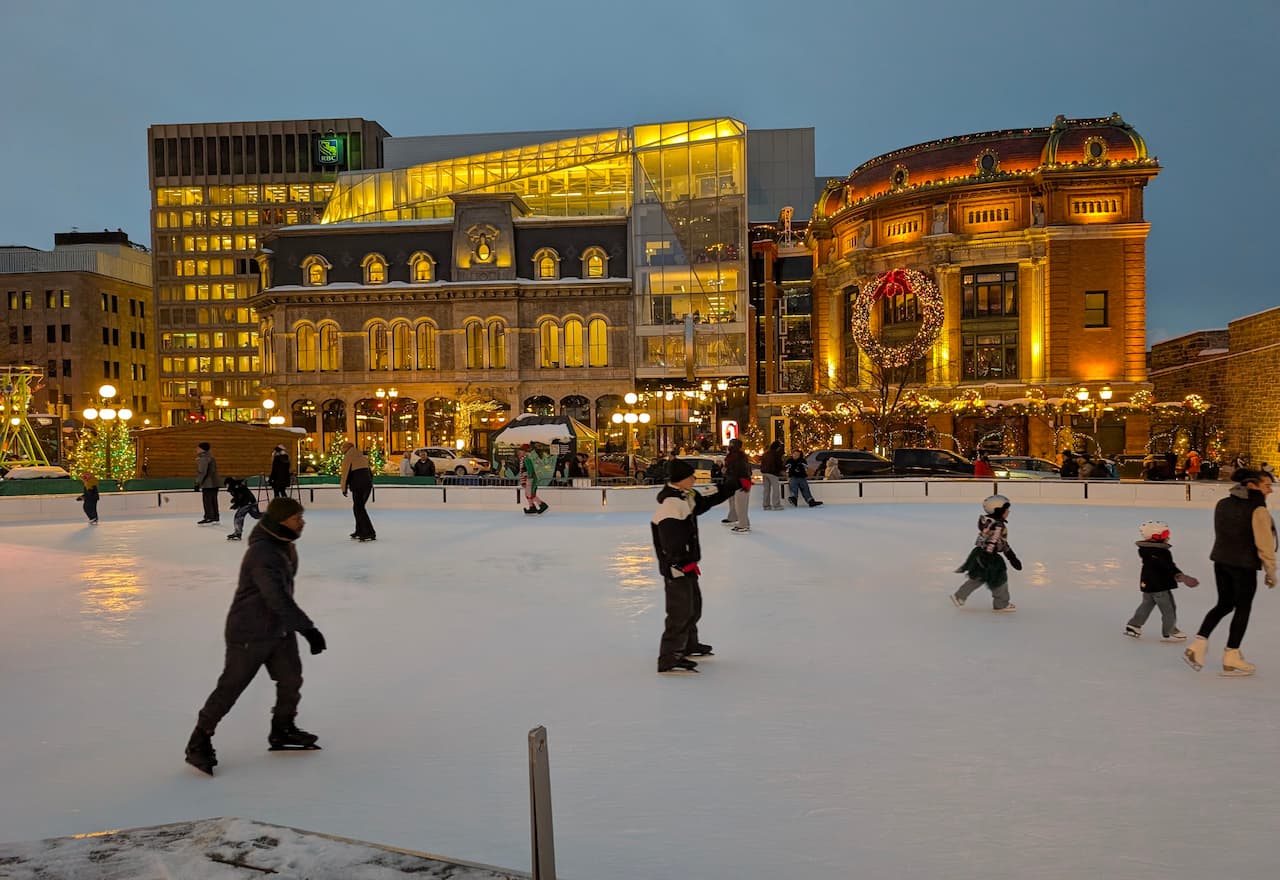
Beyond its cultural programming, Place d’Youville supports quieter routines. People meet before appointments, wait for buses, eat lunch on nearby benches, or simply sit and watch the city move.
This everyday use matters. It grounds the square in lived experience rather than spectacle. While nearby landmarks attract attention, Place d’Youville remains practical and accessible.
Weather changes its character. Winter compresses movement and sharpens sound. Summer opens the space, allowing longer stays and casual gatherings. Each season reshapes how the square is used.
Architecture as Context, Not Centerpiece
The buildings surrounding Place d’Youville do not compete for attention. Instead, they frame the space. Their presence reinforces the square’s role as a connector rather than a destination built around a single monument.
This architectural restraint allows activity to remain the focus. The square reads as a surface for public life rather than a backdrop for photography.
Why Place d’Youville Matters
Place d’Youville shows how cities function beyond postcard views. It demonstrates how history continues through use rather than preservation alone.
The square does not ask visitors to slow down, but it allows them to. It does not demand attention, but it rewards awareness. In that way, it reflects the city itself.
Visiting Place d’Youville Today
Place d’Youville is accessible year round and integrated into daily transit routes. There is no entrance, no schedule, and no prescribed path. It is best experienced by passing through and noticing how the space responds to the time of day and the people present.
Morning brings movement and purpose. Afternoons open space for pause. Evenings shift toward culture and gathering.
A Shared Urban Ground
More than a historical site or event venue, Place d’Youville acts as shared ground. It holds space for transition, expression, and routine without forcing any one narrative.
In a city known for defined landmarks, this openness gives the square lasting relevance.
The City Moves Forward Here
Place d’Youville reflects a city in motion. People pass through with purpose, pause when needed, then continue forward. It is a space defined by transition rather than permanence.
That same balance matters financially. When timing matters and plans cannot wait, Crédit Instant offers fast, transparent lending designed to support real life transitions. If you are navigating change and need short term support, access to the right financial solution can help you move forward without unnecessary stress.
FAQ
Where is Place d’Youville located?
Place d’Youville is located just outside Old Quebec, near Saint Jean Gate and major transit routes.
Is Place d’Youville used for events?
Yes. The square regularly hosts outdoor performances, festivals, and public gatherings.
Can you sit and relax at Place d’Youville?
Yes. The square includes seating and open areas where people regularly pause or meet.
Is Place d’Youville busy?
It is often active, especially during peak hours, but activity varies by time of day and season.
Is Place d’Youville worth visiting?
It is worth experiencing as part of a walk through Quebec City, especially for those interested in urban life and public spaces.